Commercial Door Closer for Hospitals and Medical Centers
Patient rooms, isolation wards and equipment corridors require controlled, quiet, and consistent door closing for infection control and life-safety compliance.
Why it matters for hospitals & medical centers
- Supports infection-control protocols with consistent, quiet closing
- UL fire-rated options for corridor and stairwell doors
- Backcheck valve protects walls from gurney and cart traffic
- Delayed-action closing for accessibility compliance
Recommended commercial door closers

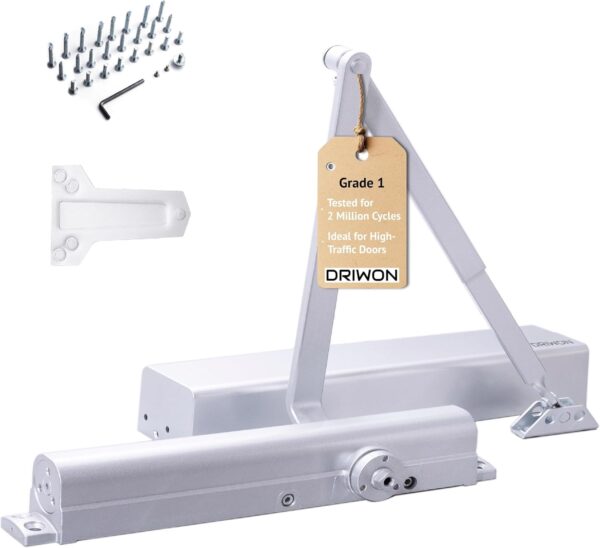
Code & compliance considerations
Healthcare facilities are typically surveyed against NFPA 101 (Life Safety Code) and NFPA 80 for fire door assemblies, which cover closing force, latching and inspection intervals. A commercial door closer heavy duty enough for constant cart and gurney traffic, with an adjustable backcheck and delayed-action valve, helps facilities managers pass accreditation surveys and ADA closing-force requirements at the same time.
Frequently asked questions
What closing force is required for ADA compliance in a hospital?
ADA guidelines generally cap interior door opening force at 5 lbf; an adjustable Grade 1 door closer lets facilities teams tune closing and opening force per door without changing hardware.
Why does backcheck matter in a hospital corridor?
Backcheck resistance slows a door before it hits full open, protecting walls and the closer arm from gurneys, carts and wheelchairs opening doors quickly.
Are these door closers suitable for fire-rated corridor doors?
Our Grade 1 commercial door closers are built to ANSI/BHMA A156.4 and are commonly paired with UL fire-rated door and frame assemblies; always confirm the full listed assembly with your fire door inspector.